Breaches in Men & Women
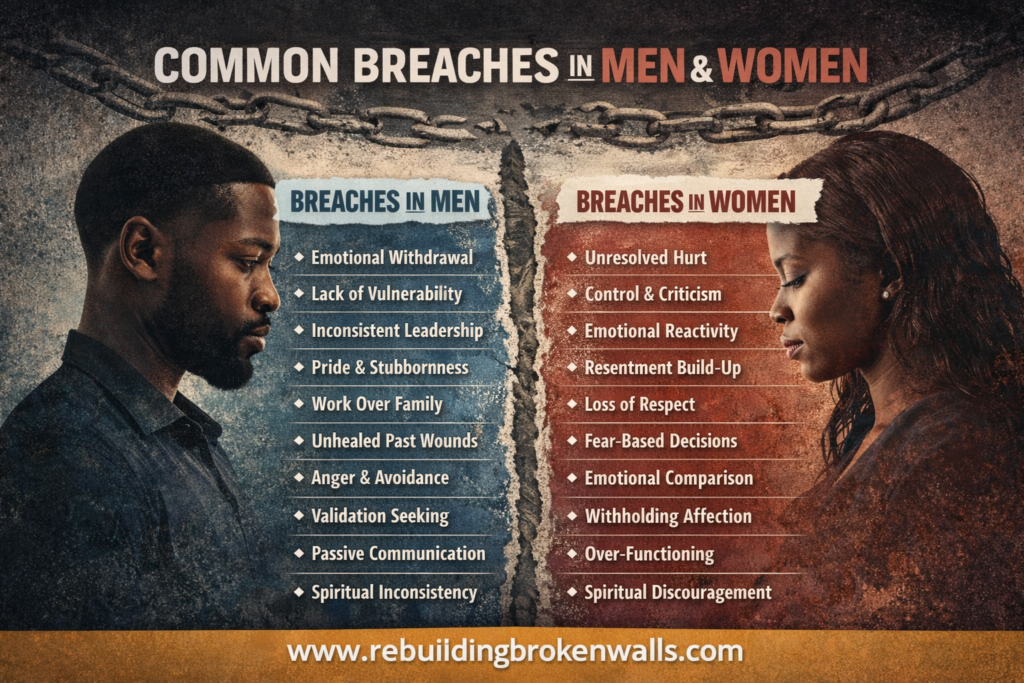
Common Breaches in Men
- Emotional withdrawal – shutting down instead of communicating.
- Lack of vulnerability – struggling to express fear, hurt, or insecurity.
- Inconsistent leadership – avoiding responsibility in key decisions.
- Pride – resisting correction or accountability.
- Work or external focus over family presence – physically present but emotionally absent.
- Unhealed past wounds – father wounds, rejection, failure trauma.
- Anger mismanagement – frustration expressed as control or silence.
- Passive avoidance – delaying difficult conversations.
- Validation outside the relationship – seeking affirmation elsewhere.
- Spiritual inconsistency – not leading or covering the household spiritually (in faith-based homes).
Common Breaches in Women
- Unresolved hurt – allowing past betrayal or disappointment to harden the heart.
- Control tendencies – stepping into dominance when trust feels unsafe.
- Communication through emotion only – reacting instead of responding.
- Resentment accumulation – not addressing small issues early.
- Loss of respect – speaking from frustration instead of honor.
- Fear-based decisions – operating from insecurity or abandonment wounds.
- Emotional comparison – measuring the relationship against others.
- Withholding affection – using distance as protection.
- Over-functioning – carrying everything and then feeling unsupported.
- Spiritual discouragement – losing hope when promises feel delayed (in faith-based homes).
Shared Breaches (Both Men & Women)
- Poor communication
- Lack of accountability
- Unmet expectations not expressed clearly
- Generational patterns
- Ego over unity
- Avoidance of conflict resolution
- Trust erosion
- Inconsistent boundaries
- Misaligned values
- Emotional immaturity
Breaches in Children
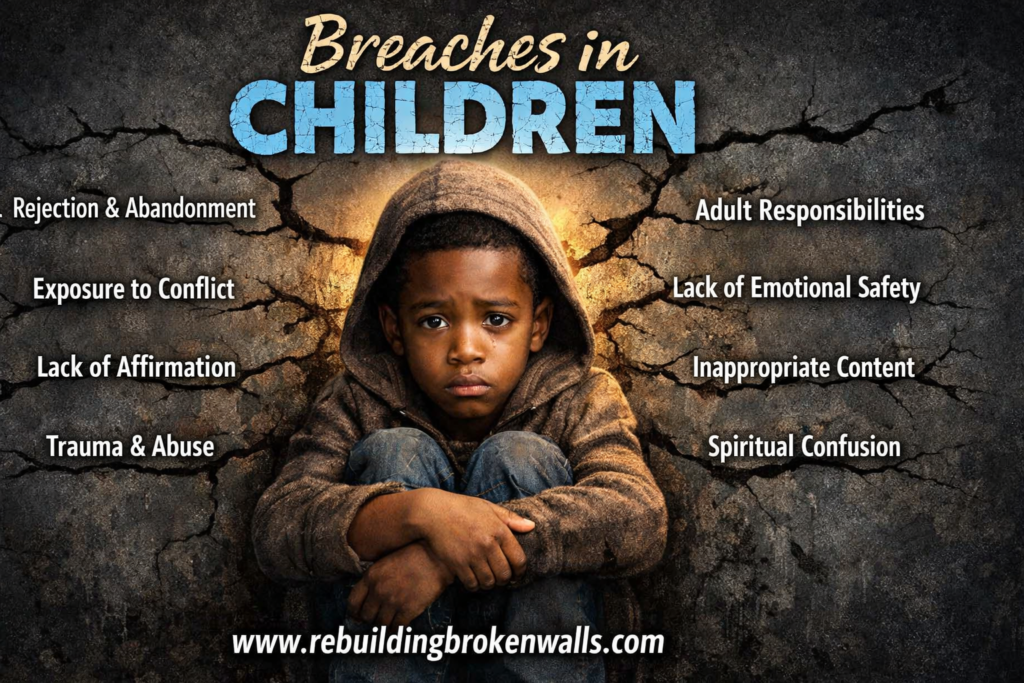
Signs a Child May Have a Breach
- Sudden behavior changes
- Withdrawal or isolation
- Aggression or frequent anger
- Rebellion
- Resistant to authority
- Overly defiant or oppositional behavior
- Nightmares or night terrors
- Fear (irrational or excessive)
- Anxiety (constant worry, nervousness, panic)
- Depression (sadness, hopelessness, low energy)
- Addictive behaviors (early dependency on screens, food, substances, or unhealthy coping habits)
- Overly clingy or overly independent
- Difficulty trusting adults
- Low confidence or negative self-talk
- Emotional numbness or explosive outbursts